Fire Door Inspections: Checks, Frequency and the Law
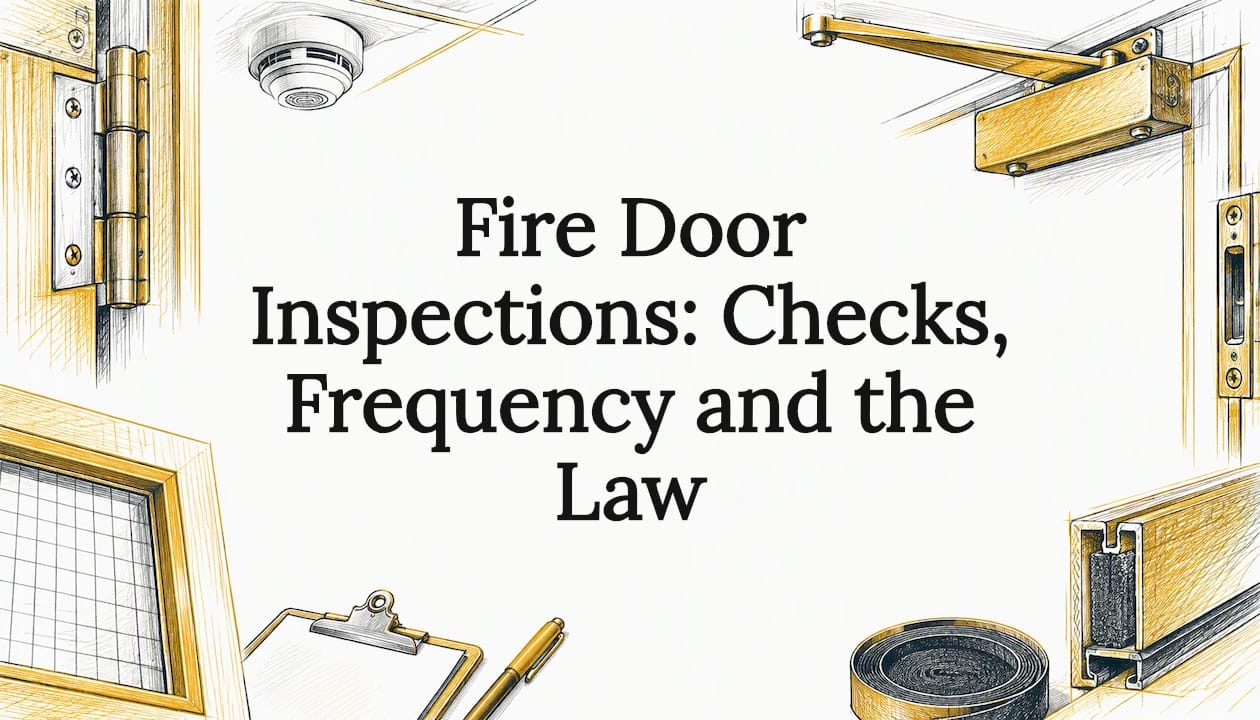
A fire door only protects a building if it is shut, intact and fitted properly when a fire starts. In England, the Fire Safety (England) Regulations 2022 set fixed check intervals for some residential buildings, and the general fire safety duties cover every other building you manage. This guide explains what to check, how often, who is responsible, what to record and how to deal with the faults you find. It is written for London facilities managers, managing agents and landlords.
TL;DR
- In England, in multi-occupied residential buildings taller than 11 metres, communal fire doors must be checked at least every 3 months and flat entrance doors at least every 12 months, on a best endeavours basis for the latter.
- Routine checks are visual and do not need specialist tools or a specialist. Repairs and replacements must go to a competent contractor, as soon as reasonably practicable.
- A check covers the door, frame and surrounding wall, glazing, seals, gaps (no more than 4mm except at the bottom), hinges and the self-closing device.
- Keep written records, including the times you could not get into a flat. Wales and Scotland have different rules, so check which applies to the building.
Table of Contents
- What the law requires
- Who is responsible
- What a proper fire door check looks like
- How often to inspect
- Records that stand up to scrutiny
- Fixing faults
- Our perspective on fire door upkeep
- Fitting fire door checks into wider building management
- Maintenance support for London portfolios
- FAQ
- Sources
What the law requires
Fire safety law in England and Wales rests on the Regulatory Reform (Fire Safety) Order 2005, known as the FSO. It applies to the common parts of multi-occupied residential buildings and to all non-domestic premises. Under it, the person in charge must keep fire safety measures in working order, and fire doors are one of those measures.
The Fire Safety (England) Regulations 2022 added specific duties for fire doors in one category of building. Regulation 10 applies to buildings in England taller than 11 metres that contain two or more sets of domestic premises. It came into force on 23 January 2023. For those buildings, the Responsible Person must:
- check communal fire doors at least every 3 months;
- use best endeavours to check flat entrance doors at least every 12 months;
- make sure the checks include whether self-closing devices are working (Regulation 10(7)); and
- record the steps taken to check flat entrance doors (Regulation 10(5)).
The government’s own fire door guidance explains how these duties work in practice. Read it before you set up a checking routine.
Buildings outside Regulation 10
Many London buildings do not meet that description: offices, shops, industrial units, mixed-use blocks and lower residential blocks. For these, the regulations do not set a fixed check interval. The general FSO duty still applies, and your fire risk assessment should decide how often fire doors are checked. The London Fire Brigade’s guidance note says that fire safety measures need only be sufficient to deal with the particular fire risks of the premises. A busy corridor door that is opened hundreds of times a day may justify a tighter routine than a riser cupboard door.
We would not suggest an interval for those buildings without it being tied to the risk assessment. Whatever you choose, write it down and stick to it. An interval you set yourself and then miss is harder to defend than a sensible one you keep.
Wales and the rest of the UK
The rules differ by nation. In Wales, the Fire Safety Act 2021 widened the FSO to include the structure, external walls and all doors between domestic premises and common parts of multi-occupied residential buildings, from 1 October 2021. Welsh guidance for small blocks of flats recommends checking fire doors in common parts at least every six months and flat entrance doors preferably annually. The Regulation 10 intervals in this guide are for England only. If you manage buildings elsewhere in the UK, use the guidance for that nation.
Who is responsible
The duty sits with the Responsible Person. For a workplace, that is the employer. For other premises, it is the person with control of the premises, such as the owner or manager. In a multi-let commercial building or a residential block, that is often the landlord, the freeholder or the managing agent acting on their behalf. Check your management agreement to see who holds the duty in practice.
The Responsible Person does not have to carry out every check personally. The government guidance says that, with the right instruction, caretakers, managing agents, housing officers and maintenance staff can do the checks. The routine checks under the 2022 Regulations are visual, need no specialist tools and do not require a specialist. Repairs are different: they must be done by a competent contractor.
That split suits most London portfolios. Your own people or your maintenance contractor’s operatives can run the regular walk-rounds. Anything that goes beyond a visual check, or that looks structurally doubtful, should be escalated.
What a proper fire door check looks like
The government guidance sets out the core of a check. You examine the door, the frame and the wall around it for damage. You check the glazing and any seals. You confirm that gaps are no more than 4mm, except at the bottom, and that the self-closing device shuts the door fully into its frame from any angle.
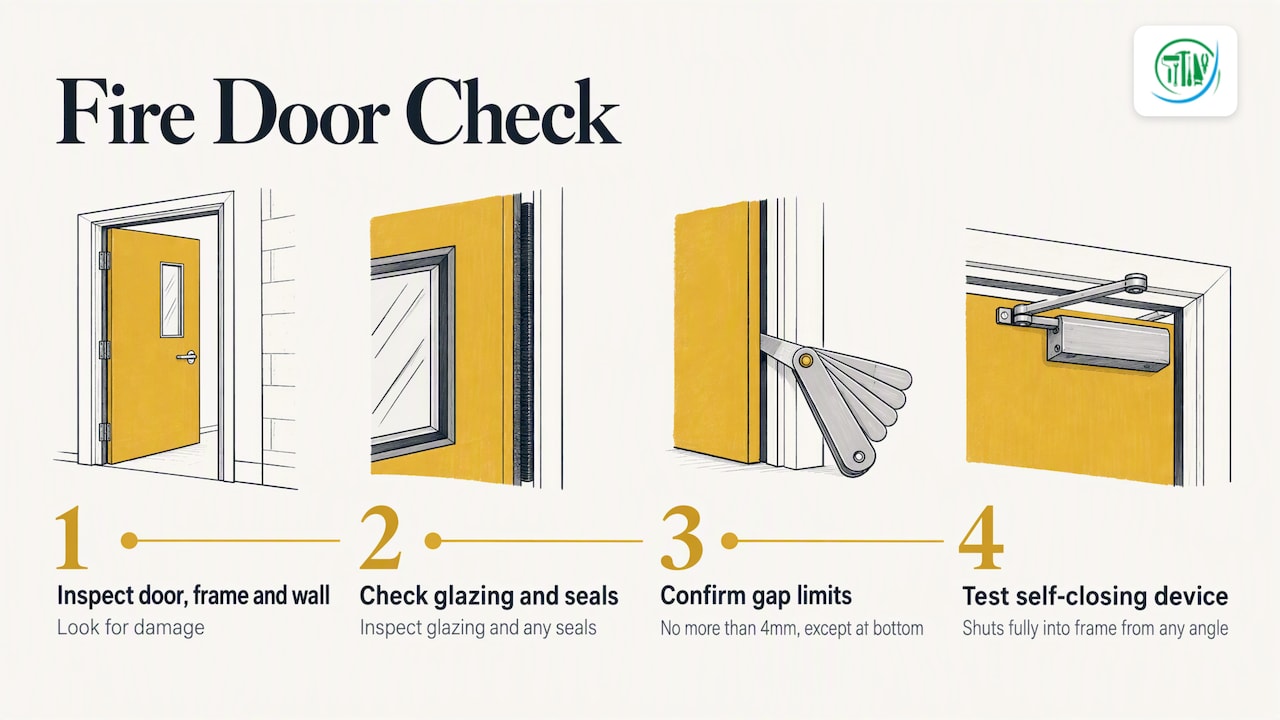
In practice we take that and break it into a short, repeatable routine for each door.
Door leaf, frame and surrounding wall
Look for cracks, splits, holes, delamination and burn marks on the leaf. Look for damage where the frame meets the wall, and for gaps in the plaster or sealant around it. Holes cut for cables, door viewers or letterplates after installation deserve a second look, because they can weaken the door.
Gaps
Check the gap between the door and the frame on the sides and top. The guidance figure is no more than 4mm, with the bottom of the door treated separately. A door that has dropped on its hinges, or a frame that has moved, often shows up first as an uneven gap. Also check that nothing has been added that bridges the gap, such as thick paint build-up or a drop-in draught excluder that was never part of the door design.
Seals
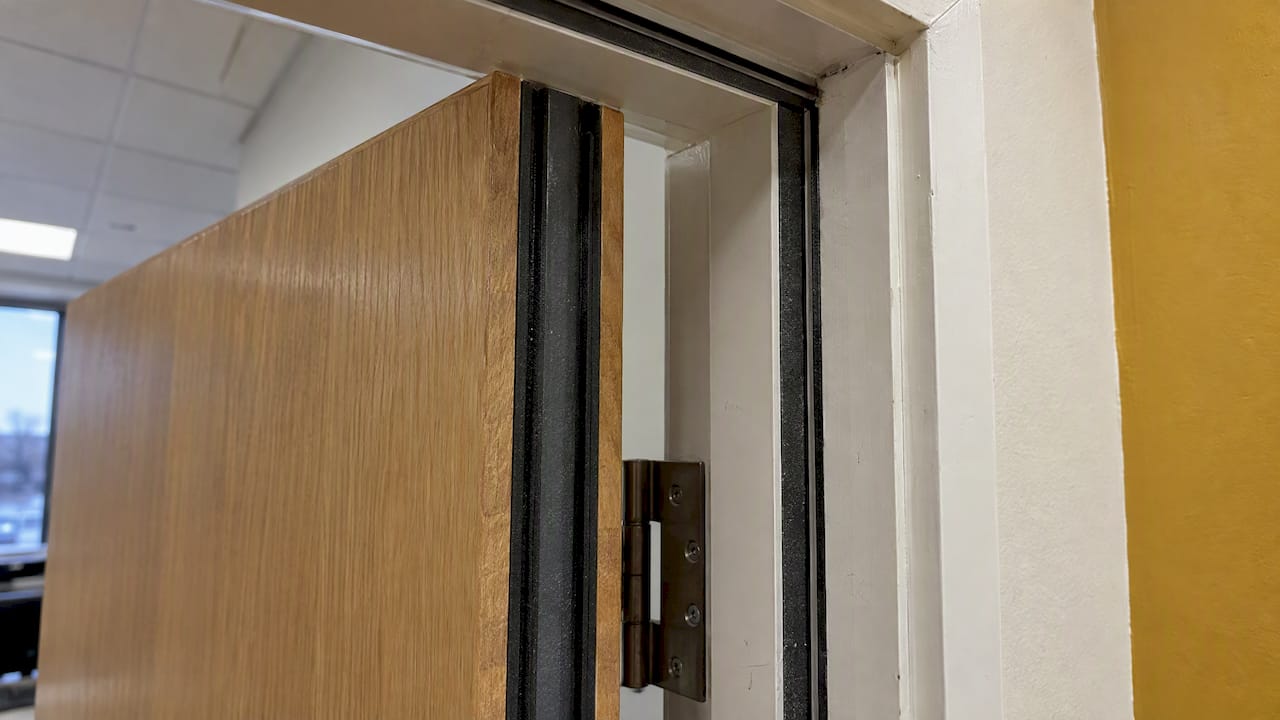
Where the door has intumescent or smoke seals, check they are present, continuous and undamaged. Seals that are painted over, torn, missing in sections or pulled out of their groove are a common find in older blocks and in offices that have been redecorated several times.
Self-closing device
Open the door wide and let go. It should close fully into the frame from any angle, without sticking and without needing a push. Regulation 10(7) makes this a required part of the checks in buildings it covers. Look at the closer body for oil leaks, loose arms and loose fixings. A door that has been wedged open, or has had its closer removed, is a fault in itself.
Hinges and ironmongery
Check that hinges are secure, with no missing or loose screws, and that the door does not drag or sag. Latches and locks should work and should hold the door shut when it closes. Door furniture that has been replaced should not have left oversized holes in the leaf.
Glazing
Vision panels need to be intact, with the glass and beads in place and no cracks or replacement panes that look out of keeping with the rest of the door. The guidance asks you to check glazing, so a cracked or missing bead is worth logging.
Signage
Fire door signs should be present and legible where the door needs them, such as “Fire door keep shut” on doors that should be closed, or “Keep locked” on cupboards. Signs do not make a faulty door compliant, but missing signs often go with doors that get propped open.
A quick walk-round table
| Item | What you are looking for | Typical fault |
|---|---|---|
| Leaf, frame, wall | Damage, holes, cracks | Cut-outs for cables, impact damage |
| Gaps | No more than 4mm, except the bottom | Dropped door, moved frame |
| Seals | Present, continuous, undamaged | Painted over, torn, missing |
| Closer | Shuts door fully from any angle | Weak, loose, removed or wedged open |
| Hinges | Secure, no missing screws | Sagging door, rubbing leaf |
| Glazing | Intact glass and beads | Cracked pane, missing bead |
| Signage | Present and legible | Missing or painted over |
How often to inspect
For the buildings Regulation 10 covers, the intervals are fixed:
| Door type | Minimum check frequency | Duty |
|---|---|---|
| Communal fire doors | At least every 3 months | Responsible Person |
| Flat entrance doors | At least every 12 months | Best endeavours |
The source for both figures is Regulation 10. “Best endeavours” matters for flat entrance doors, because a resident may not let you in. If that happens, you do not stop trying, and you do not simply drop the door from the schedule. The Responsible Person must keep a record of the steps taken, including cases where access to a flat was not granted, over each 12-month period.
Some practical points we would build into a schedule:
- Treat the legal intervals as a minimum. High-traffic doors, doors in stairwells and doors that residents or staff are known to prop open may need more frequent attention.
- Set a reminder to chase access in good time, so that a refused or missed visit leaves you enough of the year to try again.
- For buildings below the 11-metre threshold or outside residential use, put your chosen interval in the fire risk assessment, and review it when something changes, such as a refurbishment or a change of occupier.
A professional survey, as opposed to a routine visual check, is a separate decision. It can make sense when you take over a building, after major works, or when routine checks keep turning up faults you cannot judge. The RICS Journal has carried an argument that fire doors should be judged on how they perform for fire safety rather than rigidly against modern standards, which is a useful reminder that older doors in older London buildings need a considered assessment, not an automatic replacement order.
Records that stand up to scrutiny
The regulations require one record specifically: the steps taken to check flat entrance doors, including failed access. Beyond that, Welsh guidance describes keeping records of maintenance of fire safety precautions as good practice, and the same logic holds in England. If an enforcing authority, an insurer or a leaseholder asks what you did, a dated record is your answer.
For each door, we would log:
- A unique door reference and its location, matched to a floor plan.
- The date of the check and who carried it out.
- What was checked and the result, door by door, not a single “all doors checked” line.
- Any fault found, with a photograph where possible.
- The action taken, who did it and the date the fix was completed.
- For flat entrance doors, each attempt to gain access, and what happened.
Keep the records somewhere the whole team can reach, and keep the same format from one quarter to the next so trends are easy to spot. A door that fails every quarter is telling you something that a one-off repair will not fix.
Fixing faults
When a check finds a problem, the government guidance is clear that a repair or replacement must be done by a competent contractor as soon as reasonably practicable. There is no fixed number of days in the research we relied on, so do not quote one. What matters is that you can show the fault was logged, prioritised and dealt with without delay.
A sensible way to triage:
- Immediate: a door that does not close, a closer that has failed, a missing or badly damaged leaf or large gaps. Consider interim measures and get the repair booked straight away.
- Short term: damaged or missing seals, loose hinges, cracked glazing beads, loose door furniture.
- Planned: worn paintwork, faded signage, doors that are compliant but approaching the end of their life.
Do not let a quick fix make things worse. Fitting the wrong hinge, cutting a new hole or planing a door down can all reduce its fire resistance. Where a door needs replacing, the replacement should be matched to the fire rating of the one it replaces, which a competent contractor will confirm.
Our perspective on fire door upkeep
Fire door checks tend to fail for a boring reason: they belong to nobody in particular. The Responsible Person owns the duty, the caretaker walks past the doors and the repair sits in a queue between a managing agent, a fire risk assessor and three different contractors. The result is a long defect list and no single person who can close it.
We approach it as a maintenance problem. A fire door is a piece of building fabric with moving parts, and it wears like any other: hinges loosen, closers weaken, paint builds up in the seals. Folded into a planned preventative maintenance schedule, the checks happen on the same rhythm as everything else, and a loose hinge or a failing closer is fixed on the next visit, not raised as a separate job months later.
The repairs that follow checks are usually carpentry, joinery, ironmongery and making good, with occasional compliance-related remedial works. Those are trades we cover under one contract, with a named contract manager and monthly reporting, so the fault, the fix and the record sit in the same place. We do not carry out fire risk assessments, and we would always want the findings of yours to drive the priorities. Where a fire door repair needs a specialist doorset manufacturer or a fire safety professional, we say so rather than stretch beyond our own scope.
— BW Building Maintenance
Fitting fire door checks into wider building management
Fire doors are one line on a long list of recurring duties. The same people who run quarterly fire door checks are also scheduling roof inspections, plumbing visits and contractor access. Our guides on commercial roof maintenance and permit to work systems cover two of those. Portfolio teams also run things like vendor permits and access control, which multifamily parking management tools handle for residential sites. The principle is the same: put each recurring duty on a schedule with an owner and a record.
If contractors do the repair work, check their credentials. Our explainer on what to check about CHAS accreditation lists what to ask for. Unresolved defects also feed into complaints and claims, which is covered in our piece on preventing housing disrepair claims.
Maintenance support for London portfolios
If you want fire door checks and the repairs that follow them to run on one schedule, BW Building Maintenance provides planned preventative and reactive maintenance for commercial properties in London. Carpentry, joinery and locks, painting and making good, and compliance-related works sit under one contract, with DBS-checked operatives, SafeContractor and CHAS accreditation, a dedicated contract manager and detailed monthly reports.
FAQ
How often should fire doors be checked?
In England, in buildings taller than 11 metres with two or more sets of domestic premises, communal fire doors must be checked at least every 3 months. Flat entrance doors must be checked at least every 12 months, using best endeavours. For other buildings the regulations set no fixed interval, so your fire risk assessment should decide.
Do I need a specialist to inspect fire doors?
Not for the routine checks under the 2022 Regulations. The government guidance describes them as visual, needing no specialist tools or specialist. With suitable instruction, caretakers, managing agents and maintenance staff can carry them out. Repairs and replacements must be done by a competent contractor.
What gap is allowed around a fire door?
The government guidance says gaps should be no more than 4mm, except at the bottom of the door. A larger gap on the sides or top suggests the door has dropped or the frame has moved, and it should be logged and repaired.
What records do I have to keep?
For buildings covered by Regulation 10, you must record the steps taken to check flat entrance doors over each 12-month period, including any occasion when a resident did not grant access. Keeping door-by-door records of all checks and repairs is good practice and makes your position easier to prove.
Do these rules apply in Wales and Scotland?
The Regulation 10 intervals are for England. Wales has its own legislation and guidance, including a recommendation to check common-part fire doors at least every six months in small blocks of flats. For Scotland, use the Scottish Government’s guidance.
Sources
- Fire Safety (England) Regulations 2022: fire door guidance
- The Fire Safety (England) Regulations 2022, Regulation 10
- Fire safety consultation: government response
- London Fire Brigade fire safety guidance note on the Regulatory Reform (Fire Safety) Order
- Commencement of section 156 of the Building Safety Act 2022 in Wales
- Guide to making your small block of flats safe from fire (Wales)
- RICS Journal: why we should not be dogmatic about fire doors
- Multifamily parking management for property managers