Permit to Work System: How It Works in Building Maintenance
A permit to work system is a formal, written authorisation that controls hazardous or non-routine maintenance jobs such as hot works, confined space entry, electrical isolation and roof access, and the HSE guidance on permit-to-work systems (HSG250) is the benchmark for doing it properly. If your contractors touch any of those tasks in your buildings, you need one.
TL;DR:
- Set a clear validity limit, typically no more than 24 hours, and issue a new permit whenever the job’s scope, location, or conditions change.
- Require a competent issuer and receiver to sign, verify controls on site during the job, and physically return the permit for signed handback.
- Keep a written list of authorized issuers, confirm each has seen the work area, and audit live jobs as well as completed paperwork.
- When permits overlap, such as hot work on a roof, cross reference them so each trade knows which controls the other permit covers.
Table of Contents
- What does a permit to work system do, and when do you need one?
- What must a valid permit contain?
- How does the permit lifecycle work from issue to handback?
- Who signs, and what competence should you expect?
- Which failures and human factors should you watch for?
- What does a permit look like for hot work, confined spaces, isolation and roof access?
- How does a managed maintenance contract help with permit coordination?
- An editorial view: stop auditing paper and start auditing the work
- Managed maintenance to support your permit to work system
- FAQ
- Sources
What does a permit to work system do, and when do you need one?
A permit to work sits inside a wider “control of work” framework. HSE describes it as a formal management system that authorises hazardous or non-routine work and records the job, the risks and the precautions required before anyone starts. It is not a replacement for a risk assessment. It puts the risk assessment into practice at the point where the work happens.
You need one when routine instructions are not enough. In building maintenance that usually means:
- hot works, such as welding, cutting or anything producing flames, sparks or heat
- entry into confined spaces such as tanks, voids and some plant rooms
- mechanical or electrical isolation of plant and equipment
- work at height, including roof access
The permit also works as a communication tool. HSE’s human factors guidance says the most successful systems help site management, supervisors and the people doing the work to talk to one another, and that they depend on trained, competent people. A permit nobody reads or discusses is just paper.
What must a valid permit contain?
A permit should answer, in plain terms, what is being done, where, by whom, for how long and under what conditions. HSE’s guidance sets out the core content. A sample hot-work permit annex shows how it looks in practice: job details, checklists and isolation data, an authorisation section with a validity limit, receipt by the competent person and a clearance section on completion.
Expect to see:
- the location and a description of the work
- the proposed time and duration, with clear limits on validity (typically not exceeding 24 hours)
- precautions required before, during and after the work
- isolation details and emergency procedures
- signatures from the person authorising and the person controlling or receiving the permit
- a clearance section confirming the area and equipment are safe
A permit is never a blanket authorisation. If the scope, location or conditions change, the permit stops being valid and a new one is needed.
Pro Tip: Ask for a sample permit from any contractor before the job starts. If they cannot show you one with a limited validity period and a clearance signature, their system is not ready.
How does the permit lifecycle work from issue to handback?
The lifecycle has several stages. Treat each as a checkpoint where you can assign a duty and ask for evidence. HSG250 places the permit within a control-of-work framework and covers planning, training, competence and audits.
- Risk assessment. Decide whether the task needs a permit at all, and whether a safer method removes the hazard. Hot work, for example, should be replaced where a safer option exists.
- Authorisation and issue. A competent authorised person checks the precautions, records the limits and signs the permit. The person receiving it signs to confirm they understand the conditions.
- Execution and monitoring. Checks happen on site while the work runs: fire watch, air testing and verification of isolations as applicable. Someone must actually go and look.
- Clearance and handback. The permit is physically returned and signed off, confirming the area and equipment are safe to use again. HSE’s guidance stresses a formal handback stage and closing the permit immediately on completion.
Who signs, and what competence should you expect?
Several roles matter on most maintenance jobs: the permit issuer (authoriser), the person in direct control of the work, the competent operatives doing it, and the site manager who holds overall responsibility. HSE’s human factors guidance describes a three-party communication principle between site manager, issuer and the person carrying out the work.
Competence is the real test. Issuers must be competent for the permits they sign. HSG253 explains that safe isolation depends on permit-to-work arrangements, procedures, training and competence working together, and that isolation and de-isolation should be planned and administered through the permit scheme. Guidance on welding in confined and restricted spaces adds that whoever develops the safe system of work must be competent.
Keep a written record of who is authorised to issue and close permits. If a name is not on that list, their signature should not count.
Which failures and human factors should you watch for?
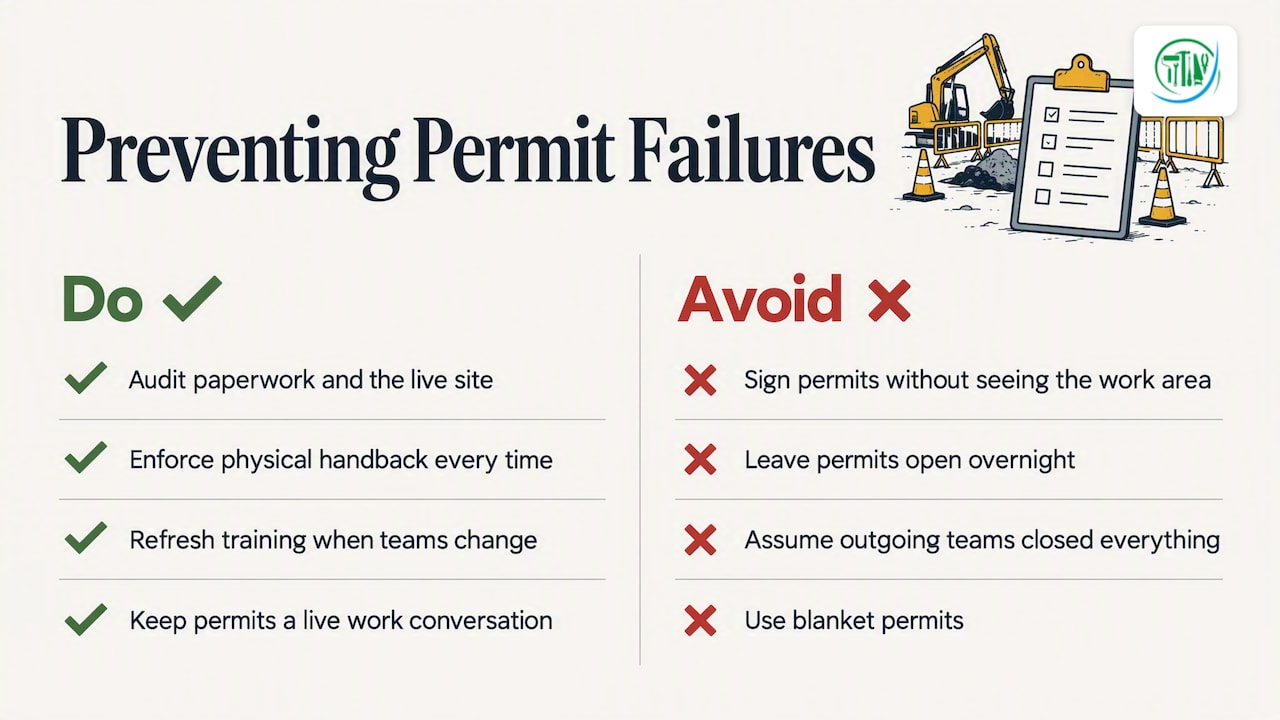
Most permit failures are human, not technical. HSE identifies complacency, poor handovers between shifts and treating the permit as a bureaucratic hurdle as common causes. Blanket permits are another trap: they undermine the whole point of limited, job-specific control.
Watch for permits signed in an office by someone who has not seen the work area, permits left open overnight, and handovers where the incoming team assumes the outgoing team closed everything out.
Practical controls are straightforward. Audit both the paperwork and the live site, since a perfect file can hide a poor job. Enforce handback every time. Refresh training when people or contractors change. The permit must stay a live conversation about the work in front of you, not a historic record filled in afterwards.
What does a permit look like for hot work, confined spaces, isolation and roof access?
Short, field-level examples show how the principles apply.
- Hot work. HSG168 advises designated hot-work areas where possible, screening, fire-resisting enclosures or covers, a fire watch during and after the work, and permits that set out precautions before, during and after. Council hot-work guidance also requires a site-specific risk assessment.
- Confined space. HSE’s confined spaces brief guide stresses formal checks before entry: air testing, rescue arrangements and competence. Confined-space work must be planned and carried out safely.
- Isolation. Expect isolation certificates, proper locking and tagging, and a controlled de-isolation procedure, all administered through the permit scheme as HSG253 explains.
- Roof access. The Work at Height Regulations 2005 require work at height to be planned and carried out safely. In practice that means scoping the task, edge protection and permit-based controls over who goes up and when. Electrical work must be planned and carried out safely.
Pro Tip: Where two permits overlap, such as hot work on a roof, make sure each permit refers to the other so nobody assumes the other trade has covered the hazard.
How does a managed maintenance contract help with permit coordination?
Permit failures often start where trades meet: one contractor isolates, another works, a third reinstates. With all trades under one contract and a named contract manager, we keep permits, handovers and closure in one place. Our operatives are DBS-checked, and we hold SafeContractor and CHAS accreditations. When you appoint any contractor, ask for documented permit procedures, trained operatives and regular audit reports.
An editorial view: stop auditing paper and start auditing the work
The conventional advice is to tighten the form. We think that misses the point. A well-designed permit signed by someone who never saw the roof, the tank or the plant room is worse than no permit, because it creates false confidence. HSE’s own human factors guidance makes the same case: communication and competence decide whether a system works.
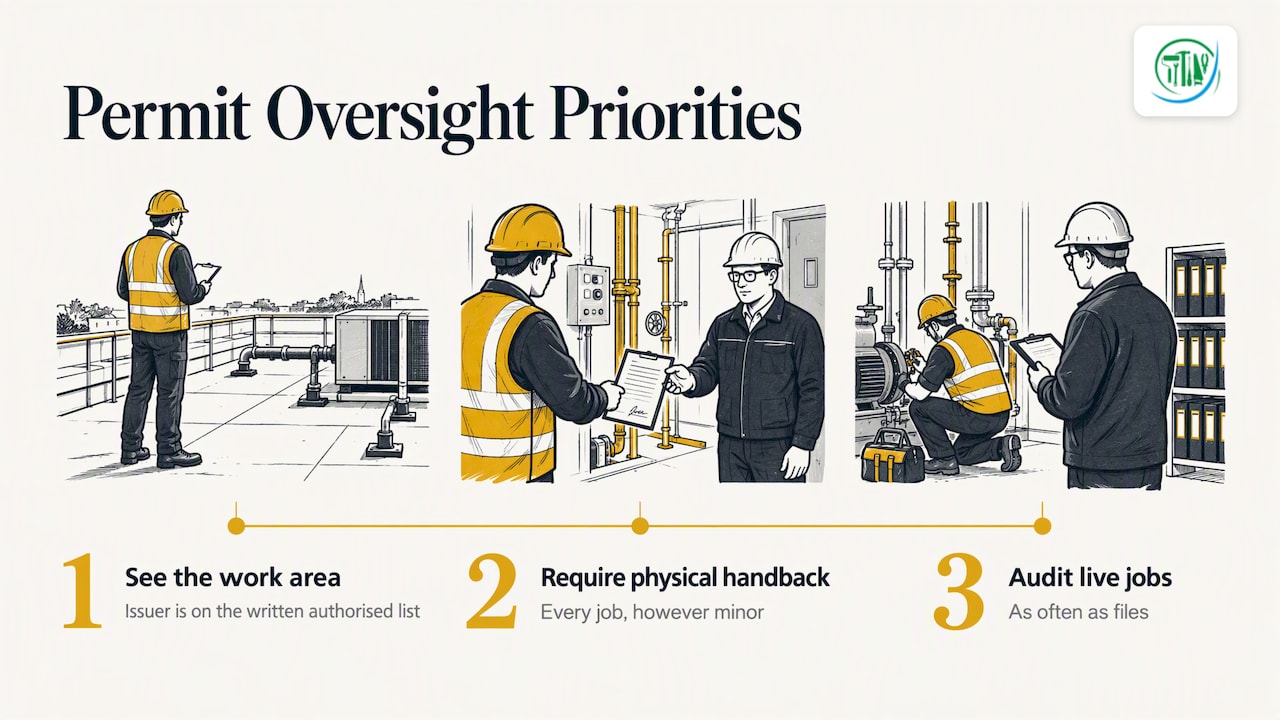
If you manage buildings in London, prioritise three things in order. First, make sure the person issuing permits has seen the work area and is on your written authorised list. Second, insist on a physical handback every time, however minor the job. Third, audit live jobs as often as you audit files.
The fewer parties you coordinate, the less can fall through the gaps between them. Reducing contractor handovers is often a better safety investment than adding another layer of paperwork.
— BW Building Maintenance
Managed maintenance to support your permit to work system
If you want fewer hand-offs to manage, our planned and reactive maintenance covers plumbing, heating and drainage, electrical works and testing, roofing, guttering and external fabric, carpentry, joinery and locks, and more, all under one contract with a named contract manager. That single point of contact makes it easier to keep permits, isolations and handbacks consistent across trades. You can see what we cover on the BW Building Maintenance service page.

FAQ
What is meant by a permit to work system?
It is a formal management system that authorises hazardous or non-routine work and records the job, risks and precautions. HSE describes it as a structured written record issued before work begins.
What tasks require a permit to work?
Typically hot work, confined space entry, mechanical or electrical isolation and work at height such as roof access. The need comes from your risk assessment, not from a fixed list.
How long does a permit to work last?
A permit should have clear limits on validity, and HSE’s guidance says these typically do not exceed 24 hours. It must be closed as soon as the work is complete.
Do contractors on site need a permit to work system?
Where their work is hazardous or non-routine, yes. HSG250 advises making sure contractors are competent and that their procedures fit your control-of-work arrangements.