Commercial Roof Maintenance for Property Managers: Check Twice Yearly
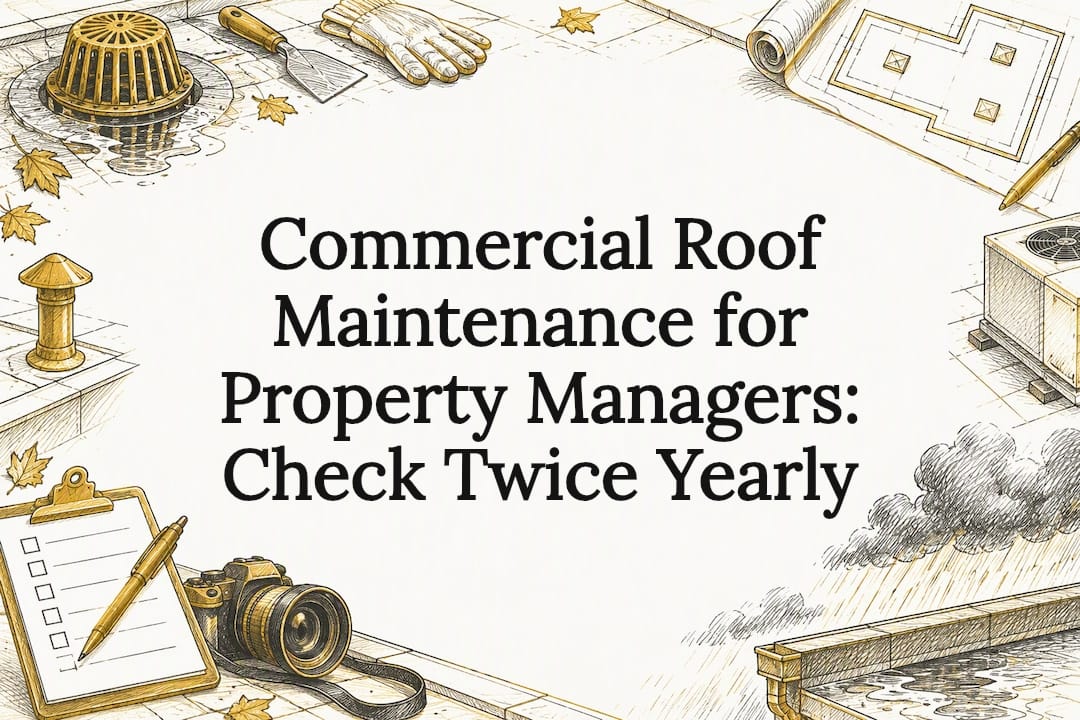
The fastest way to prevent leaks and avoid costly repairs is a documented preventive maintenance programme built on at least two roof inspections a year, plus checks after severe weather. Inspections should cover drains, flashings, penetrations, and rooftop equipment, with photo documentation and prompt minor repairs that stop small defects from becoming major failures.
TL;DR:
Each report should include photographs, exact defect locations, severity ratings, and recommended actions, creating a maintenance history that supports warranty claims and insurance discussions.
Inspect drains, seams, flashings, penetrations, equipment supports, adjacent walls, and interior ceilings; check again after contractors or other trades work on the roof.
Clear debris and drainage paths between formal inspections, but have qualified roofers assess ponding, damaged seams, or repairs beyond simple clearing.
Anyone going on the roof, even just to inspect it, needs a planned, safe way of working and competent people under the Work at Height Regulations 2005; repairs usually need extra controls.
Table of Contents
-
When to schedule roof inspections and what triggers an extra check
-
Why a single managed contract changes the maintenance equation
-
How BW Building Maintenance supports your roof and building upkeep
What a thorough commercial roof inspection should cover
A useful inspection is not a glance from the parapet. It is a systematic walkthrough that treats the roof as a system of interconnected parts, any one of which can let water in.
Each inspection should check the following areas:
-
Membrane and seams: look for cracking, blistering, or seam separation that signals the surface is failing.
-
Flashings and metal coping: check these areas for signs of water entry, as they bridge different materials and movement rates.
-
Penetrations: check pipes, vents, and conduit boots for wear or gaps around their seals.
-
Drains, gutters, and scuppers: check for blockages and ponding.
-
Rooftop equipment plinths and fastenings: check for loose anchoring or deteriorated upstands.
-
Parapets and adjacent walls: check for cracked masonry or failed coping that could allow water entry.
-
Interior ceilings and service voids: check for stains or damp patches that may indicate water entry.
A commercial roof inspection, as described by Travelers and NRCA guidance, is a planned condition assessment of the roof surface, drainage components, flashings, penetrations, adjacent walls, rooftop equipment, and interior signs of leakage. Every finding should be documented with photographs, a defect location, a severity rating, and a recommended corrective action. That record becomes the backbone of your maintenance history and your case for any warranty claim.
When to schedule roof inspections and what triggers an extra check
NRCA guidance recommends inspecting commercial roofs at least twice a year, preferably in spring and autumn, with an additional inspection after any severe weather event. This schedule provides regular opportunities to check roof condition.
-
Spring inspection: check for winter damage, ice, and accumulated debris, as well as any visible cracks.
-
Autumn inspection: check drains and seams and look for new gaps.
-
Post-storm inspection: consider an inspection after severe weather or contractor work that involved walking on the roof.
Consider construction activity by other trades, such as HVAC servicing or satellite installation, as a reason to check the roof for damage.
Routine preventive tasks that keep small problems small
Between the baseline inspections, routine upkeep can help reduce the risk of leaks. A facilities team may be able to handle some of these tasks; consult a roofing contractor for work beyond simple clearing.
-
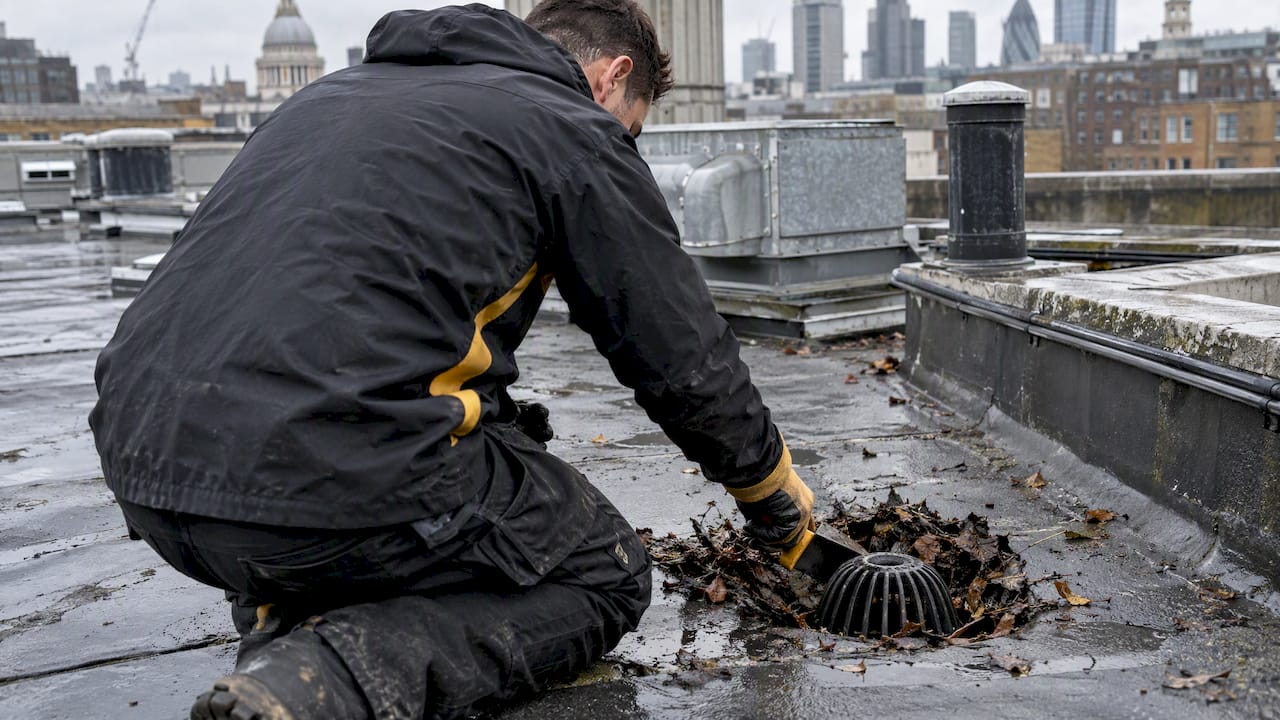
Debris removal: leaves, branches, and sediment trap moisture and block drainage paths.
-
Drain and gutter clearing: keeping drainage paths clear can help reduce ponding.
-
Flashing and seam sealing: have a qualified person assess small gaps and determine whether sealing or other repairs are appropriate.
-
Coping repair or replacement: damaged coping exposes the wall assembly behind it to direct water intrusion.
-
Penetration checks: reseal around pipes and vents as soon as shrinkage or cracking appears.
-
Ponding water monitoring: document standing water and ask a roofing professional to assess its cause.
-
Equipment tie and support checks: check for loose anchors and damage to the surrounding membrane.
A maintenance schedule can include routine visual checks, thorough inspections and drain cleaning, and prompt clearing when ponding is found. Set the schedule according to the roof’s condition, system, and warranty requirements. Roof coatings and cool-roof systems are a separate, system-level decision. Compatibility with the existing membrane and the roof’s drainage design should be assessed before committing to a coating, since the wrong product can trap moisture rather than shed it.
Pro Tip: Log every drain-clearing visit with a date and photo. A record of routine cleaning can be useful when discussing a leak with an insurer.
Responding to storm damage: triage and temporary fixes
Severe weather turns a scheduled maintenance item into an emergency one. Prompt action and a clear order of operations can help manage water damage and tenant disruption.
-
Assess active leaks and other visible damage promptly, including blocked drains, displaced flashings, torn membrane sections, and damaged rooftop equipment.
-
Document everything before you touch it: photograph the damage, note its exact location, and rate its severity so the repair crew arrives prepared.
-
Stop the water with temporary measures such as tarpaulins or internal containment while you arrange a permanent fix.
-
Decide on urgency: have a qualified roofing professional assess the urgency of active leaks and other damage, and arrange appropriate repairs.
Who should be on the roof, and what safety requires
Roof access is not a casual task, even for a quick look. HSE guidance on roof work (HSG33) makes clear that roof work needs to be planned, with a risk assessment and competent people, and the Work at Height Regulations 2005 apply to a quick inspection just as much as to a repair. Falls through fragile surfaces such as rooflights cause more roof-work deaths than any other single cause.
Before anyone goes onto the roof, confirm:
-
A safe way of preventing falls has been agreed for the specific roof and task.
-
Edge protection is in place, and fragile surfaces such as rooflights are covered or guarded.
-
Personal protective equipment and a rescue plan are ready, not just assumed.
-
The person carrying out the work is competent for the task under the Work at Height Regulations 2005.
Carrying tools or materials and concentrating on a repair can divert attention from an unprotected edge or fragile surface, so a maintenance visit usually needs more controls than a quick visual check. Any contractor carrying out repairs should supply a written risk assessment and method statement (RAMS) before accessing the roof.
Turning inspections into a working maintenance programme
An inspection report is useful. An ongoing programme can help manage costs and support warranty records.
A solid programme includes:
-
A defined inspection frequency, including the baseline inspections and checks after severe weather.
-
A standardised report format: photos, defect location, urgency, and recommended action for every finding.
-
A drain-cleaning schedule tied to the local debris and weather pattern.
-
Clear minor-repair authority and escalation rules so small fixes do not wait for a committee decision.
-
A documented approach to post-storm response and any contractor requirements tied to the roof’s warranty.
An inspection history file pays off three ways: it supports warranty compliance when a manufacturer asks for proof of maintenance, it gives you a factual basis in insurance conversations after a loss, and it informs capital planning for eventual replacement.
| Cost driver | Why it matters |
|---|---|
| Roof area | Larger surfaces take longer to inspect and clean |
| System type | Membrane, built-up, or metal systems need different maintenance steps |
| Access | Access conditions can affect the work required |
| Climate exposure | Local weather conditions can inform inspection planning |
| Equipment density | More rooftop units means more penetrations and tie-downs to inspect |
Because NRCA notes that no single global price applies to maintenance programmes, use these drivers as your starting point for a budget conversation with a contractor rather than a fixed figure.
Why a single managed contract changes the maintenance equation
Juggling separate contractors for roofing, drainage, and general building fabric can make coordination more difficult. A contract covering multiple trades, with a named contract manager and consolidated reporting, can help coordinate responsibility and the handover from inspection finding to repair. Ask contractors about their personnel checks, accreditations, and safety procedures before arranging roof access.
— Montgomery
How BW Building Maintenance supports your roof and building upkeep

We bring roofing, guttering and external fabric work into the same contract as your plumbing, electrical, carpentry and compliance work, so inspection findings turn into scheduled repairs without a second procurement process.
-
We run planned preventative maintenance alongside reactive and emergency repairs under one agreement.
-
We can assign a contract manager and provide reports on findings and completed work.
-
Ask us about personnel checks, accreditations, and response arrangements for your contract.
If you want a maintenance plan that covers your roof and the rest of your building fabric in one place, review our building maintenance services and request a tailored proposal.
FAQ
How much does commercial roof maintenance cost?
Cost depends on roof area, system type, access, climate exposure, and how much rooftop equipment needs checking, so there is no single global figure. A contractor can give a planning range once they know your roof’s size and condition, and an inspection history helps keep that estimate accurate over time.
What is proper roof maintenance?
Proper roof maintenance combines preventive inspection, routine cleaning, and prompt minor repairs rather than waiting for a visible leak, according to NRCA guidance. It means inspecting the roof at least twice a year, clearing drains regularly, and fixing small defects like cracked flashing before they grow into larger failures.
How much does it cost to coat a commercial roof?
Coating cost varies with roof size, the existing membrane’s condition, and the coating system chosen, and no universal price applies across roof types. Compatibility between the coating and the existing roof assembly should be confirmed before budgeting, since the wrong pairing can trap moisture instead of protecting the surface.
What is a commercial roof inspection?
A commercial roof inspection is a planned, documented assessment of the roof surface, drainage, flashings, penetrations, adjacent walls, and rooftop equipment, along with a check for interior signs of leaking, as described in Travelers and NRCA guidance. Findings are recorded with photos, locations, and severity so repairs can be prioritised and tracked over time.